Introduction
Easton MA real estate stands apart from every other market in southeastern Massachusetts, anchored by a Frederick Law Olmsted-designed village center, large wooded lots, and a school system that families move across the state to join. Easton straddles the Bristol-Norfolk County line and serves as a quiet, residential alternative to the higher-priced communities further north on the Route 138 corridor, offering buyers a combination of historic New England beauty and practical suburban living that has made it consistently popular with families, professionals, and long-term homeowners. If you are exploring communities in southeastern Massachusetts and have not yet looked seriously at Easton, this guide will show you why it belongs on your list.
The Easton MA real estate market in 2025–2026 reflects the steady, appreciation-driven character that has defined the town for the past decade. The average home value tracked by Zillow sits at approximately $674,257, representing a 1.3 percent year-over-year gain through late 2025\. The Realtor.com median listing price runs around $662,500, with a median sale price in August 2025 of approximately $758,000 reflecting the full range of homes transacting — including some notable larger properties that pull the sale median above the listing median. Homes are spending a median of around 26–48 days on market depending on the source and season, and the sales-to-list ratio hovers near 99 percent, suggesting that well-priced homes sell cleanly without requiring dramatic price reductions.
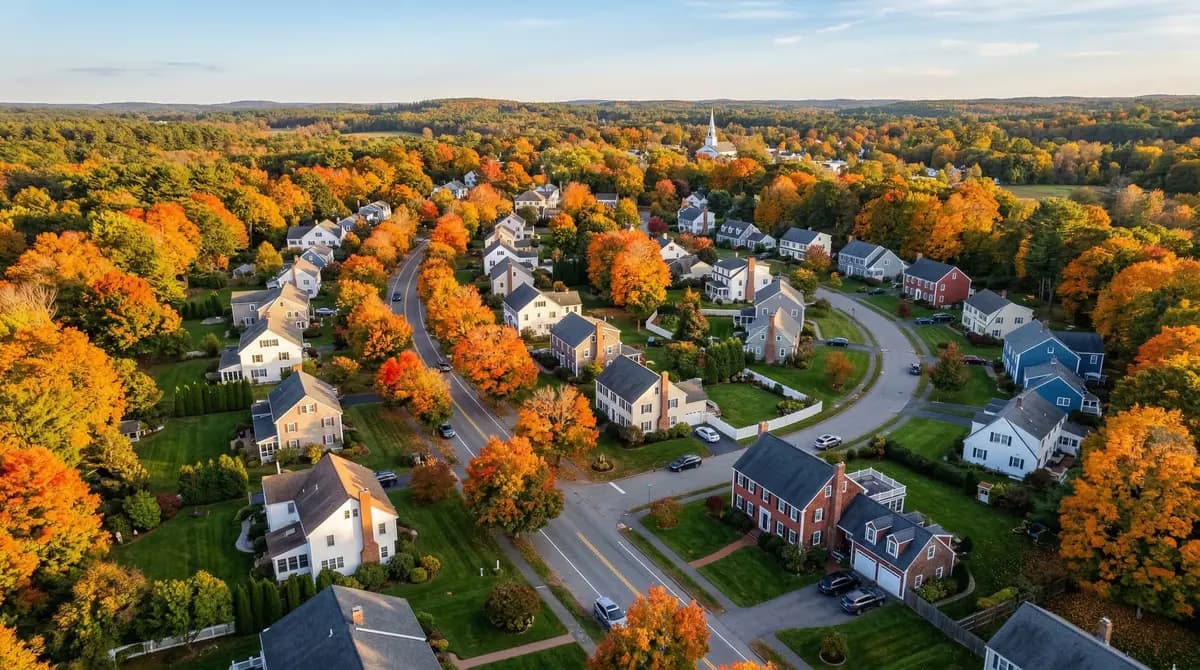
What makes Easton compelling is not just the numbers. Drive through North Easton village — a National Historic Landmark district featuring buildings designed by H.H. Richardson in collaboration with the Ames family — and you understand immediately why buyers develop long-term attachments to this town. The combination of architectural beauty, mature tree canopy, conservation land, and a school system that consistently receives strong ratings makes Easton more than a real estate market; it is a place where people genuinely want to live.
Why Easton Matters for Buyers
For buyers evaluating Easton MA real estate against competing markets in the region, the value proposition is straightforward: you get more land, more architectural character, and a stronger sense of community than you will find in more congested suburbs, for a price that remains meaningfully below the communities directly north on the Route 128 corridor. The median list price of approximately $662,500 and average home value near $674,257 compare favorably to Canton at $743,450 and Sharon at well over $800,000, while Easton's quality of schools and community investment is broadly competitive with those more expensive towns.
Year-over-year appreciation has been modest but consistent — approximately 1.3–5.1 percent depending on the data source and time period examined (Zillow, 2025 data across multiple sub-areas). Over three years, Easton's median listing price has increased approximately 13 percent (Realtor.com), tracking slightly below the county-wide average appreciation rate but remaining solidly positive. This moderate pace of appreciation, relative to some hotter markets in the region, actually creates opportunity for buyers who are not trying to time a rapidly escalating market.
One metric worth noting for Easton: the median rent of approximately $3,005–$3,284 per month (Zillow and Realtor.com data) is among the highest in Bristol County, reflecting strong rental demand from professionals who work in the region's employment corridors. For buyers who are currently renting in Easton, the rent-to-own math is compelling — monthly ownership costs at current mortgage rates for a median-priced home are competitive with rental costs, particularly when equity accumulation is factored in.
Neighborhoods and Housing Types
Easton is a study in contrast between its two principal villages and the more open residential land that connects them. North Easton is the town's historic crown jewel — a nineteenth-century mill and civic center complex where H.H. Richardson designed the Old Colony Railroad Station, the Ames Free Library, and several other buildings that are now part of the Easton Historic District. Housing in and near North Easton village tends to be older, more architecturally significant, and highly sought after, with prices typically ranging from the $650,000s to well over $1 million for larger properties near Main Street or on the village's quiet residential lanes.
South Easton and the wider suburban fabric of the town account for the majority of Easton's housing stock — principally four-bedroom Colonials, cape-style homes, raised ranches, and expanded Capes built from the 1960s through the early 2000s on lots ranging from a half-acre to five or more acres. Active listings in early 2026 spanned a wide range, from a $510,000 three-bedroom on Marshall Road to a $2,199,999 five-bedroom estate on Randall Street, with the bulk of available inventory in the $650,000 to $900,000 range (Zillow active listing data, 2025).
Condominium inventory is limited in Easton, with smaller complexes scattered throughout the town. The Gaslight Lane and Winterberry Lane communities represent options for buyers who want the Easton address and school district with reduced maintenance responsibilities, typically at prices from the $450,000s to $730,000s for two-bedroom units.
The town's conservation-minded land use policies have kept large tracts of land protected, which means that the remaining residential parcels tend to be well-landscaped and private. Buyers who want a large lot and natural surroundings will find Easton's housing stock particularly satisfying.
Schools, Commute, and Lifestyle
Easton Public Schools serve approximately 4,500 students and maintain a strong reputation within Bristol County. Elementary schools serve the community from kindergarten through grade 5, feeding into the Easton Middle School and ultimately Oliver Ames High School. Oliver Ames has been recognized for its academic programming, extracurricular opportunities, and college-preparation outcomes, and the school's presence is one of the reasons families with school-age children actively seek Easton real estate. Statewide data on school performance is available directly through the Massachusetts DESE and serves as a useful resource for families comparing districts.
Commuting from Easton is primarily highway-based, with Route 138 serving as the town's main north-south spine. Route 138 connects north to Canton and Route 95 in approximately 15 minutes, providing access to the Route 128 employment corridor, Logan Airport (approximately 45–50 minutes in off-peak conditions), and the broader Greater Boston market. For MBTA Commuter Rail access, the closest stations are Canton Junction (on the Providence/Stoughton Line) to the north, approximately a 15-minute drive, and Stoughton (on the Stoughton Branch) to the northeast, also approximately 15 minutes. Both stations provide regular service to South Station.
Lifestyle in Easton is outdoors-oriented and community-centered. Borderland State Park — one of the state's most beloved regional parks, with nearly 1,800 acres of trails, ponds, and historic Ames Mansion — sits within the town's western boundary and provides extraordinary year-round recreation for residents. The Sheep Pasture environmental education center, several local farms, and the town's strong tradition of youth athletics round out a lifestyle that brings families outdoors and in contact with neighbors.
What to Expect When Buying Here
Easton MA real estate moves more deliberately than the most competitive towns in the region, but that measured pace does not mean the market is forgiving of under-preparation. With 30–50 active listings across the town at any given time and homes spending a median of 26 days pending (Zillow, 2025), there is enough inventory that buyers are not typically forced into instant decisions — but homes priced correctly and presented well still move quickly.
The most important preparation step for Easton buyers is understanding the town's two distinct housing personalities: the historic North Easton village market, where properties are unique, often require specialized financing considerations, and are sold through a small, tight-knit community of buyers and sellers; and the broader suburban Easton market, where more standard single-family homes trade in a more transparent, competitive environment. Your agent needs to understand both markets and be able to advise you on the nuances of each.
Septic and well considerations are important in Easton as they are in Raynham — many properties outside the village center are on private utilities, and the costs of Title V compliance or well water remediation can be meaningful. Budget for these inspections as part of your due diligence, not as afterthoughts.
Frequently Asked Questions
Work With a Local Expert
Easton MA real estate rewards buyers who approach the market with patience, preparation, and a genuine appreciation for what makes this town special. Jessica Shauffer is a Coldwell Banker agent serving Easton and the surrounding communities in Bristol, Norfolk, and Plymouth Counties, with the local market knowledge and client-centered approach that buyers in this market need. Whether you are drawn to the historic character of North Easton village or the spacious suburban appeal of South Easton's residential neighborhoods, Jessica is ready to guide you to the right home at the right price. Reach out today to begin your Easton home search.
Ready to Make a Move?
Jessica Shauffer is a top Coldwell Banker agent serving Easton, Attleboro, Mansfield, and 22 other South Shore communities. Get a free consultation today.